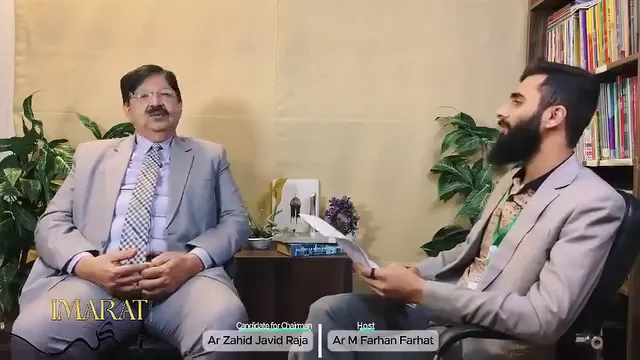
ImaratGallery is a neutral platform for architects and election candidates. The purpose is simple: create an oPCATP Elections 2025: Ar. Zahid Javed Raja on Reforming the Architectural Professionpen space where candidates, professionals, and young architects can raise concerns, share ideas, and discuss the changes needed for a stronger profession.
Key Takeaways
- PCATP’s 1983 Constitution needs a comprehensive review and modern amendments.
- Complete digitalisation can improve transparency, access, communication, and accountability for architects.
- Town halls and monthly progress reports can reconnect PCATP with its members.
- Young and female architects need stronger professional opportunities, fairness, and representation.
Table of Contents
- Why PCATP Needs Serious Reform
- Digitalisation Must Go Beyond an Online Application
- Architects Must Regain Their Professional Authority
- Unauthorized Practices and Ready-Made Drawings
- Assessing the Existing PCATP Leadership
- Accreditation, Professional Practice, and Fairness
- Town Halls and Solution-Oriented Engagement
- Women Architects Deserve Equal Opportunity
- Does the Voice of Architects Reach PCATP?
- Will Architects’ Issues Matter After 20 February 2025?
- A Message for Young Architects
- A Call for Collective Responsibility
Why PCATP Needs Serious Reform
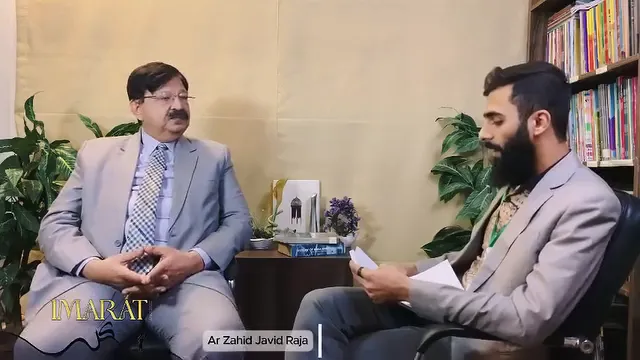
Ar. Muhammad Farhan Farhat: Do you believe there should be regular engagement between PCATP and young architects? Does the PCATP Constitution of 1983 need to be upgraded?
Ar. Zahid Javed Raja: Certainly. The Constitution needs a complete review. There are many clauses that require proper study and reconsideration. We need input from architects across the profession, including senior professionals and young architects, before introducing amendments that reflect modern solutions.
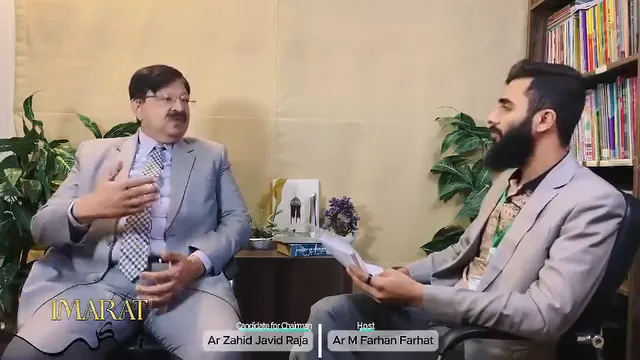
The profession has changed significantly, but many systems have not kept up. A constitution prepared decades ago cannot remain untouched when practice, education, technology, approvals, and professional expectations have all evolved.
The important point is not to make changes casually. Every clause needs to be studied properly, the gaps need to be identified, and the amendments must be practical. We should discuss them collectively in a larger meeting or Extraordinary General Meeting, take the matter to government, and push for the necessary legal changes.
Young architects, in particular, are facing distress and mistrust. PCATP must work to rebuild confidence. Small improvements in procedure can create major positive changes for the profession.
Digitalisation Must Go Beyond an Online Application
Ar. Muhammad Farhan Farhat: PCATP has introduced an online application. What further work is required?
Ar. Zahid Javed Raja: The direction should be complete digitalisation. An online application is only one part of a much bigger system. Registration, accreditation, correspondence, updates, complaints, information sharing, and professional records should be handled through an efficient digital platform.
A properly managed digital system can make PCATP more accessible, transparent, and responsive. It can also reduce unnecessary delays and help members understand where their cases stand.
Digitalisation is not just about convenience. It is about accountability. When systems are clear and trackable, members have greater confidence in the institution.
Architects Must Regain Their Professional Authority
Ar. Muhammad Farhan Farhat: Architects often feel that their professional role is being undermined. How can this be addressed?
Ar. Zahid Javed Raja: Architects have the ability to command the architectural design and construction process. The profession has the capacity. The issue is that this authority has not been properly applied or implemented.
We have spent decades discussing the same problems. Now we must move beyond discussion and bring the profession to the implementation stage. Architects should be recognised as central professionals in design, construction, planning, and the built environment.
The professional role of an architect cannot remain limited to submitting drawings or obtaining approvals. Architects must be respected for their technical knowledge, their design responsibility, and their ability to contribute to better cities and better communities.
Unauthorized Practices and Ready-Made Drawings
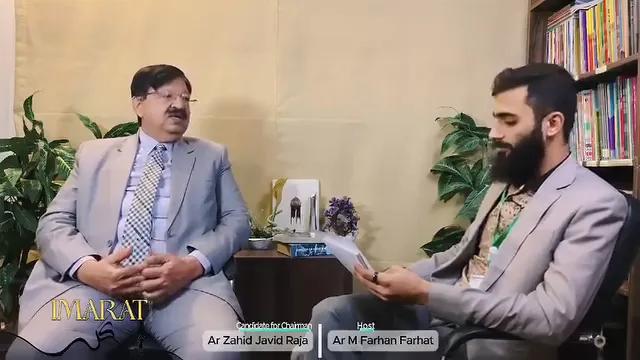
Ar. Muhammad Farhan Farhat: Many authorities provide ready-made drawings directly to clients. Can PCATP take action against such practices?
Ar. Zahid Javed Raja: This is a serious issue. Many architects are registered with PCATP, yet some agencies and private authorities operate in ways that harm professional practice. For financial gain, they reduce the role of architects and treat architectural services as something that can simply be packaged and sold.
Housing authorities and private developments must be examined carefully. Whether it is DHA, Bahria Town, Lake City, or any other authority, the profession must ask whether the architectural process is being protected and whether registered architects are being given their rightful role.
Membership and practice are different concepts, but PCATP has a responsibility towards its members. If architects are facing professional injustice, their concerns must be heard and addressed.
If elected, I would take up such matters and work towards practical solutions. It is not enough to identify a problem. The institution must develop a mechanism to resolve it.
Assessing the Existing PCATP Leadership
Ar. Muhammad Farhan Farhat: How do you assess the current PCATP leadership?
Ar. Zahid Javed Raja: Opinions can differ, but I believe they have made efforts and done their homework. The major issue is implementation. They may have tried to fulfil their role, but the profession did not receive the results it needed within the available time.
We should remain fair in our assessment. Every office bearer has a different attitude, different priorities, and different constraints. I do not want to compare myself with anyone else. What matters is that anyone holding a public office or an office representing the entire profession should do their best.
For the coming term, the focus should be on implementation, measurable results, and a stronger connection with architects across Pakistan.
Accreditation, Professional Practice, and Fairness
Ar. Muhammad Farhan Farhat: Has PCATP declined during the past four years? What needs to improve in accreditation and professional practice?
Ar. Zahid Javed Raja: There has certainly been a decline in working relationships and trust. When professionals start criticising each other without listening to one another, problems become more difficult instead of being resolved.
We need to develop the habit of listening, absorbing criticism, and discussing solutions with maturity. A professional body should bring people together, not widen the gap between them.
There is also a major concern regarding young graduates. A student spends five years in a university, works through a demanding curriculum, and then still faces uncertainty over registration, professional practice, examinations, and career prospects.
Institutions need to strengthen curriculum delivery and professional-practice preparation. At the same time, PCATP must ensure fairness and transparency in accreditation. Personal likes and dislikes should never influence professional decisions. The system must be based on merit, professional standards, and clear criteria.
When accreditation becomes transparent, institutions improve. When professional practice becomes stronger, graduates enter the field with greater confidence.
Town Halls and Solution-Oriented Engagement
Ar. Muhammad Farhan Farhat: If elected, will you hold town hall meetings with architects?
Ar. Zahid Javed Raja: Certainly. I have always believed that stakeholders must be engaged. Architects in practice, teachers, students, young professionals, and senior professionals are all important stakeholders.
We are very good at identifying problems, but we do not spend enough time on solutions. We need solution-oriented work so that issues reduce instead of growing year after year.
Town hall meetings can give architects a proper platform to discuss their concerns directly. Local architects face local problems, and those problems should not be ignored simply because they are outside major cities.
I have previously engaged with architects in cities such as Multan, and if elected, I would continue and expand that exercise. The objective is direct communication, clear identification of issues, and practical follow-up.
Monthly Progress Reports
Ar. Muhammad Farhan Farhat: How can architects know whether their concerns are actually being addressed?
Ar. Zahid Javed Raja: Regular progress reporting is important. If there are three or four formal meetings in a year, members should still receive monthly updates explaining:
- Which issues have been raised.
- What action has been taken.
- Which cases are still under process.
- What results have been achieved.
This type of reporting creates accountability. It also gives architects confidence that their concerns are not disappearing after a meeting.
Women Architects Deserve Equal Opportunity
Ar. Muhammad Farhan Farhat: What role should female architects play in the profession?
Ar. Zahid Javed Raja: Female architects are our colleagues. I have worked with women professionals, including women in senior positions, and those working relationships have always been productive and professional.
Women architects have the same right to grow, contribute, lead, and succeed. They should be empowered, promoted, and given more opportunities within practice, academia, institutions, and professional bodies.
The profession cannot progress if it fails to recognise the contribution of a large part of its own community. We need an environment where women architects can work with dignity, confidence, and equal professional recognition.
Does the Voice of Architects Reach PCATP?
Ar. Muhammad Farhan Farhat: In the current situation, does the voice of architects reach the PCATP office?
Ar. Zahid Javed Raja: From what I have experienced, perhaps not enough. There is a gap between the institution and its members, and that gap needs to be reduced.
PCATP needs active communication channels. Its website should be useful and regularly updated. Newsletters should be revived. Members should be informed about decisions, policies, ongoing work, and professional developments.
Communication cannot be limited to elections or annual meetings. The members are the main stakeholders, and the Council needs to bring them closer. Once the communication gap begins to reduce, trust can also begin to return.
Will Architects’ Issues Matter After 20 February 2025?
Ar. Muhammad Farhan Farhat: After 20 February 2025, will architects’ issues remain as important to you as they are today?
Ar. Zahid Javed Raja: I am not standing for election only for the sake of an election. I have worked in government departments, I have seen professional challenges closely, and I understand that there are many issues facing architects.
If elected, I would work to create systems that continue to function. Whether it requires meetings through Zoom, physical meetings, regional engagement, or different processes, the effort must continue.
People will judge the performance. My responsibility is to do my best for the Council and for the profession. I want to be remembered as someone who worked honestly for the architectural community.
A Message for Young Architects
Ar. Muhammad Farhan Farhat: Young architects have high expectations but also deep disappointment. What is your message for them?
Ar. Zahid Javed Raja: Young architects should keep their expectations high, but they should also work with commitment and patience. Their concerns are real. Jobs are limited, job structures are weak, and many young architects are leaving Pakistan because they do not see enough opportunity here.
This is not a small matter. When young professionals leave the country, the profession loses talent. Society loses talent. Families lose talent. We need to study regional models, understand how other countries structure architectural qualifications and professional opportunities, and learn what can be adapted for Pakistan.
Young architects should not lose hope. They should identify issues, raise them professionally, and participate in improving the system. Today’s young architect is tomorrow’s senior professional. The future of the profession depends on how seriously young architects prepare themselves and how seriously the profession supports them.
My message is simple: work together for society and for the profession. If there is a problem, identify it and resolve it. Do not let frustration become the final answer.
A Call for Collective Responsibility
Ar. Zahid Javed Raja: The architectural profession cannot improve through one person alone. It requires collective effort from young architects, senior professionals, educators, institutions, practicing architects, and PCATP itself.
There are personal issues, institutional issues, and community issues. All of them must be understood. Support should be given where it is needed, and solutions should be developed with sincerity.
If I receive support, I will work on the legitimate concerns of architects and strive to deliver results. Not every issue can be solved instantly, but the profession deserves an institution that listens, communicates, acts, and reports back.
The goal is a stronger PCATP, a more respected architectural profession, better opportunities for young architects, and a system in which every architect feels represented.